

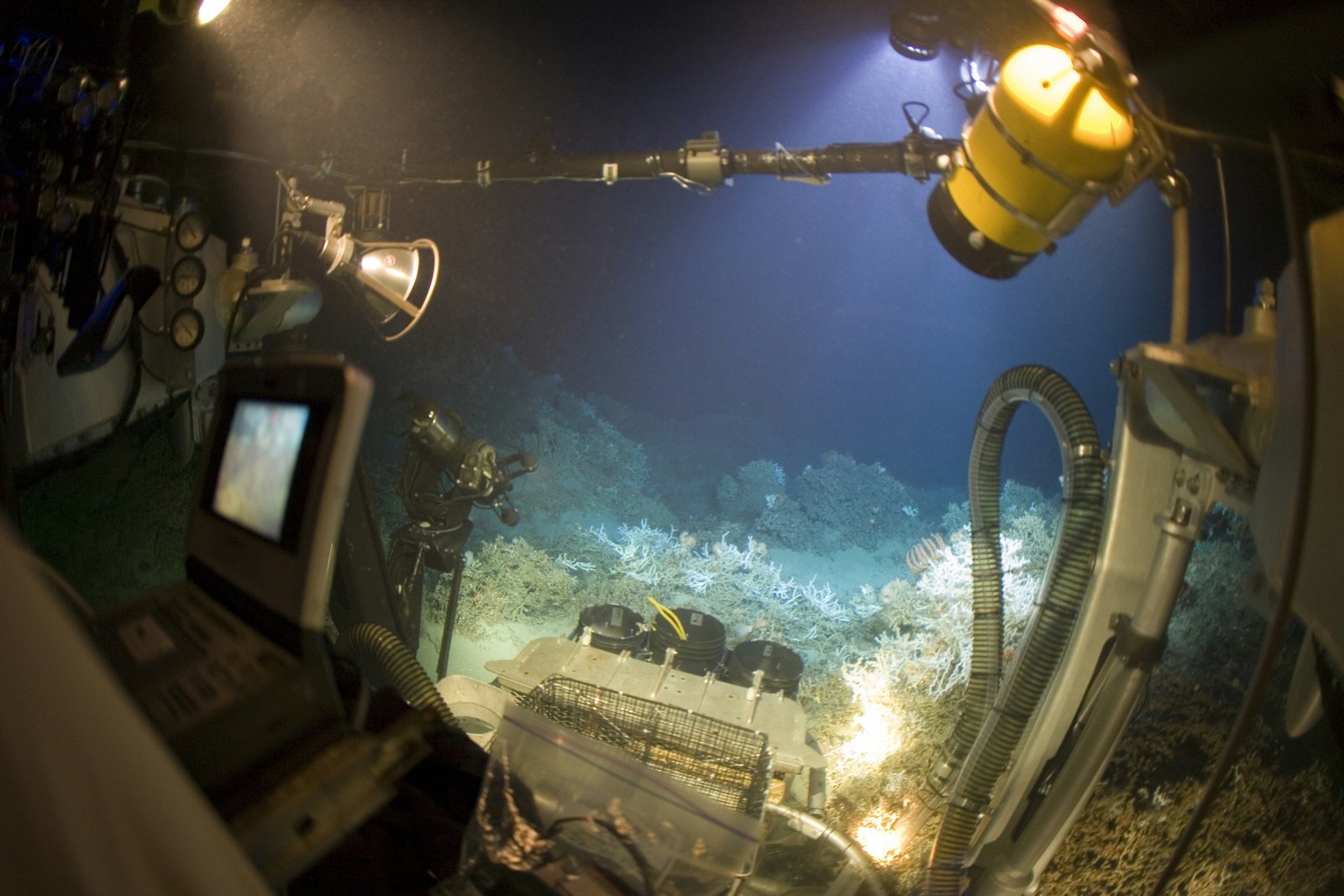
Deep beneath the surface of the Central Indian Ocean Basin, thousands of meters below where sunlight reaches, there is a quiet race for the essential components of modern energy infrastructure. Through the Ministry of Earth Sciences and the National Institute of Ocean Technology (NIOT), India is advancing its capabilities in deep-sea mining as part of its ambitious Deep Ocean Mission.
At the heart of this research are polymetallic nodules: mineral deposits shaped like potatoes that sit on the soft seabed sediment at depths of 5,000 to 6,000 meters.
What Polymetallic Nodules Contain
These geological formations develop over millions of years as metal compounds gradually precipitate from seawater and sediment fluids onto fragments of shell, rock, or bone.
They are rich reserves of metals crucial for the clean-energy transition:
-
Nickel and Cobalt: Essential components for high-energy-density lithium-ion battery cathodes.
-
Copper: The foundational material for electrical grids, transformers, and electric motors.
-
Manganese: Vital for steel production and the development of next-generation battery technologies.
India has secured a 75,000-square-kilometer exploration contract in the Central Indian Ocean Basin, granted by the International Seabed Authority (ISA). This geological reserve is estimated to contain hundreds of millions of tonnes of nodules, providing a domestic alternative to the unpredictable international mineral supply chains.
Technical and Environmental Complexities
Extracting materials from four miles underwater presents challenges, including crushing physical pressures exceeding 500 atmospheres and near-freezing temperatures. Mining operations depend on tracked crawler vehicles that traverse the abyssal plains, vacuuming up nodules and transporting a slurry mixture to surface ships through vertical riser pipes.
Marine biologists are expressing ongoing concerns. The abyssal plains are home to unique ecosystems filled with slow-growing organisms that have adapted to stable, pitch-black conditions. When deep-sea crawlers disturb the sediment, it can create plumes that drift across large ocean distances, potentially suffocating benthic organisms and disrupting the ecosystems in the water column.
In India, scientists are conducting long-term environmental impact studies in parallel with the development of the Matsya-6000 crewed submersible. Their goal is to identify low-impact extraction techniques before commercial-scale seabed harvesting begins.
Leave a Comment