

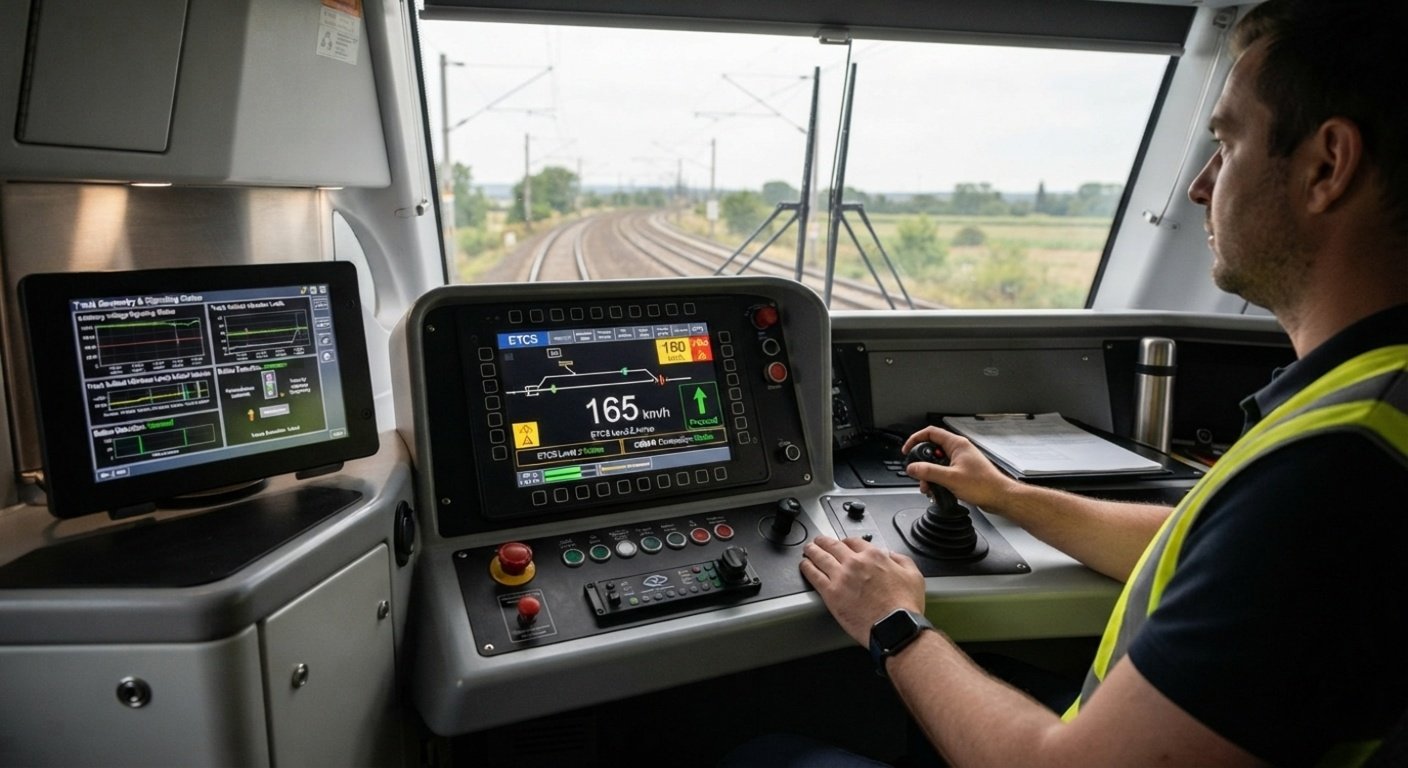
Following a series of thorough safety audits on high-density routes, Indian Railways is accelerating the implementation of its upgraded Kavach 4.0 Automatic Train Protection (ATP) system. This new version, which has received approval from the Research Designs and Standards Organisation (RDSO), aims to tackle one of the most significant engineering challenges in the Indian railway network: the dense mixed-traffic corridors where high-speed passenger trains operate alongside heavy freight trains.
Kavach serves as a homegrown electronic safety mechanism. If a train driver fails to heed a stop signal or exceeds the permitted speed, the system automatically takes control of the braking system to prevent collisions.
What Upgrades in Version 4.0 Bring to the Track
Previous iterations of Kavach required extensive cabling along the tracks and experienced delays in data transfer between adjacent signal towers. Kavach 4.0 enhances the radio frequency communication link to better manage high-density train operations:
-
Signal Passing at Danger (SPAD) Prevention: If a train passes a red signal, the radio communication modules activate the emergency brakes without relying on the driver's reaction time.
-
Head-On and Rear-End Collision Avoidance: Two trains equipped with Kavach continuously share their GPS location, speed, and track identification. If a potential collision is detected on the same track, both trains receive immediate automated braking instructions.
-
Continuous Cab Signalling: Train drivers no longer need to strain to see trackside signals through thick winter fog; signal indications are directly displayed on the in-cab screen.
-
Level Crossing Whistling: The system automatically activates the locomotive horn as the train approaches unmanned or busy level crossings.
Hardware Footprint and Deployment Challenges
Implementing this system involves more than just a software upgrade; it necessitates physical retrofitting in three distinct environments:
-
Locomotives: Each train engine requires an onboard computer, brake interface valves, driver machine interface (DMI) consoles, and radio antennas mounted on the roof.
-
Track-Side Infrastructure: RFID tags should be embedded in concrete sleepers at intervals of one kilometer, while telecom towers need to be installed approximately every 5 to 6 kilometers along the railway tracks.
-
Station Interlocking: Stationary Kavach units must be directly connected to the existing relay interlocking cabins to monitor live route configurations.




Leave a Comment